Single Dose Pharma

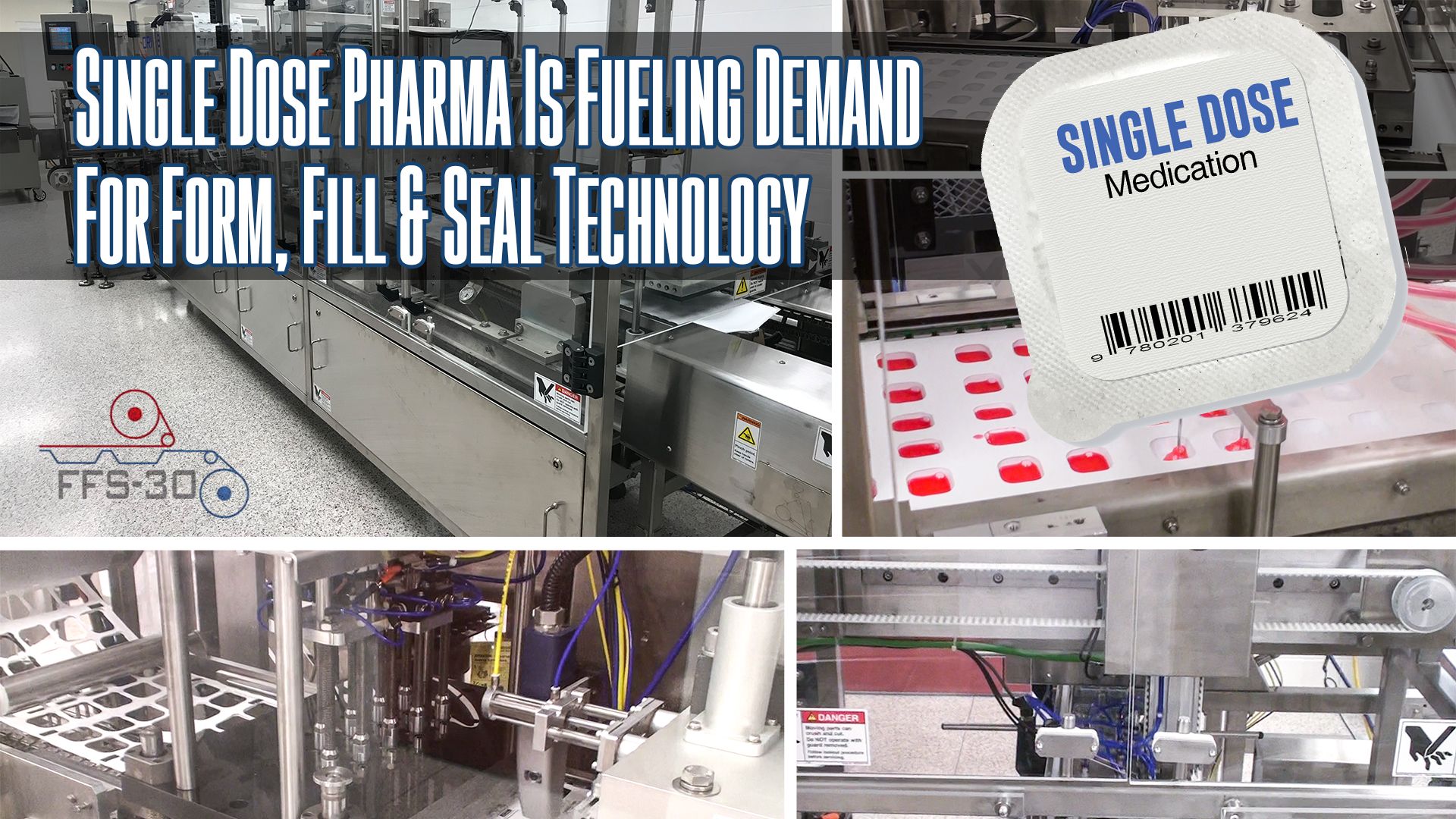
Single Dose Pharma Is Fueling Demand For Form, Fill & Seal Technology

Pharmaceutical Manufacturers Turn To Form, Fill & Seal Technology For Single Dose Medication Packaging.

Growing demand for single dose pharmaceutical packaging, particularly for aseptically filled liquid medications, is creating an opportunity for form-fill-seal (FFS) technology suppliers like ORICS Industries.

Used for the aseptic packaging of ophthalmic products, respiratory (inhaled) medications, biologics and vaccines and other injectable drugs, FFS technology enables continuous, automated forming, filling and sealing of unit-dose liquid packs.

Package formats include ampoules, vials and bottles, and product sterility can be assured throughout the process. Benefits of FFS, versus glass packaging, include reduced waste and breakage and the elimination of product preservatives, which patients may be allergic to.

The FFS-30 is an inline, intermittent motion sealing system that forms real steroids trays, cups and pouches in real time from roll stock film.

By forming trays online, this system has the ability to save the user tens of thousands of dollars by eliminating the costs associated with purchasing and shipping pre-formed trays.

What’s more, with a simple tooling change, this flexible system is capable of creating multiple tray/pouch sizes and configurations.

Film may be flexible, semi-rigid, or rigid.

Final package may be ambient, vacuumed, gas flushed to create a gas/air filled package or vacuum gas flushed to create a true Modified Atmosphere (M.A.P.) package.

FS offers cost savings over conventional aseptic processing in glass. Traditional  filling and packaging requires many steps and individual machines for filling, stoppering and capping. In contrast, FFS requires one piece of automated machinery, and takes place in six seconds or less.

When used to manufacture products intended for subsequent sterilization, these machines may be installed within an environment that would normally be considered appropriate for the manufacture and filling of terminally sterilized products. If the machines are to be used for the aseptic filling of sterile products they are usually provided with a localized environment at the point of fill with Grade A air.

Getting The Most From Form, Fill & Seal Equipment

For many brands, horizontal form-fill-seal (FFS) equipment represents a significant investment. FFS machines can be the most expensive machine on the packaging line. To maximize return on the investment, companies re-purpose machines for packaging a range of products. This makes quick tooling changes an attractive feature.

Over the last few years, ORICS Industries has worked to ease changeover in our FFS-30 for changing package sizes. We understand that our customers have been looking for ways to make it more efficient.

The ease of changeover can depend upon how easy it is to get tools in and out. Tools are often heavy and require a lot of muscle to remove and replace. This can result in injury risks, such as strained backs, broken fingers, etc. The risk of damage to tools is also heightened.

Changeover varies in complexity. The change may simply be to the packaging material, maintaining the same packaging footprint. Or, an entirely new package size or style may be needed. The amount of tooling changes depends on the degree of packaging change.

Tooling that can be changed includes forming dies, sealing platens, and cutting knives. There are control issues that may need to be changed to accommodate different packages, such as changing temperature, pressure, and index length. And there are peripheral issues associated with things like lot coders and in-line printers to changeover.

Should You Change?

Many companies that employ FFS machinery do so because they want better productivity and lower costs. Higher volumes may justify a dedicated packaging line, thus obviating the need for routine changeover. A daily production on FFS could be more than 100,000 packages, depending on the product being manufactured. Thus, the goal is often not to change out tooling.”

There may be other reasons for foregoing changeover. Validation of FFS is directly tied into forming tooling, loading, printing, sealing, and cutting. This process, when properly done, can take up to a week or more per tooling set. Once this activity is successfully completed, manufacturers would not want to upset the apple cart by making changes. This is also reinforced by the fact that FFS runs are generally three shifts for many weeks, sometimes months.

A partial if not complete validation would be required every time tooling is changed out. Depending upon the actual situation, the cost of the re-validation could exceed the potential cost savings of ‘quick-change’ tooling.

modified atmosphere packaging

What is Modified Atmosphere Packaging?

Modified Atmosphere Packaging is the combination of an optimal blend of Nitrogen and/or Carbon Dioxide with in a high-barrier or Permeable package. A finely adjusted and carefully controlled gas blend is created to meet the specific respiration need for each packaged food product.

To package a product in a modified atmosphere requires sophisticated machinery, to flush out air from the packaging chamber and replace it with a different gas or precisely defined mixture of gases, then seal the product in the packaging so that only the modified atmosphere surrounds the product and not any other unwanted gas.

Trays and Packaging films are selected to match the characteristics and needs of each food product. For instance, meat and fish require very low gas permeability films so, For non-respiring products (meat, fish,cheese, Etc..) high barrier films are used. The initial flushed gas mixture will be maintained inside the package. Fruit and Vegetables, However, are respiring (breathing) products where the interaction of the packaging material with the product is important. In this instance, the permeability of the packaging film is adapted to the products respiration. The goal is to establish an equilibrium between the O2 and the CO2 inside the package and this balance results in extended shelf life. in nearly all instances, a M.A.P gas mix slows down the product deterioration, spoilage and rancidity caused by mold and other aerobic organisms.

WHY  M.A.P  SEAL ?

Longer shelf life M.A.P packages allow food processors, food manufacturers, food distributors and food retailers to better control product quality, availability and costs. Longer freshness cycles permit grocers to eliminate frequent product rotation, removal and restocking; thereby reducing labor and waste disposal cost. Distributors can extend distribution territories or offer a greater variety of product line to the retailer, Since less frequent product replacement requirements permits growth in other areas. Food Manufacturers are able to take advantage of extended replacement cycles to reduce production replacement demands. Manufacturing capacity can be more profitably utilized by developing and offering new products.

call us at 718-461-8613 or visit our  site www.orics.com


Orics Greek Yogurt, lassi

Yogurt Cup Filling Sealing Machine

Yogurt cup Filling and sealing packaging machine.

Yogurt is one of the in demand product types in the fermented foods industry, so it is worth examining some of the issues associated with producing this product. ORICS Industries has many years experience and expertise in helping yogurt companies deal with industry specific issues.

Top 3 Issues For Yogurt Packaging

A grainy texture during fermentation

Fermentation time decreases when higher temperatures are set which means manufacturers can break, cool and package it faster. To some degree, it can be detrimental to the consistency or texture of the finished yogurt. Yogurt set at higher incubation temperatures can incubate to a grainy texture.

Faster acid production from the culture as it metabolizes lactose and ferments it into lactic acid can shock the inherent dairy proteins in the yogurt. Incubating yogurt at a high temperature may reach the break pH in a shorter amount of time. But the faster acid production from the lactic acid bacteria can shock the dairy proteins and make the finished texture grainy in the incubation vat or in the cup, if it is set in the cup.

Setting the yogurt at a lower set temperature will produce acid at a slower rate, with less probability of shocking the dairy proteins.

 Yogurt is too tart

Yogurt that is too tart is counter to any marketing objectives. How does this yogurt become too tart? Manufactures sometimes disregard anticipating at what pH the yogurt should be broken and cooled. Manufacturers often need to break the yogurt at a higher pH in order for it not to go below the desired pH by the time the yogurt is packaged in the retail cup, cased, stacked and cooled in the cooler.

The solution to this problem is to simply raise the break pH to allow less of a pH drift downward by the time the yogurt has cooled, been mixed with any added fruit and sugar, and it is finally cooled down in the finished retail package.

A grainy appearance

A grainy appearance is often cause by starch selection. Many starches can have a grainy texture if they are not fully cooked out and swollen. Starch exists as tiny “granules” that swell and enlarge in size, which develop viscosity as they tie up or bind the available moisture in the dairy product. Milk contains 87% water, and plain sweetened yogurt in fact would have about 76% available water, depending upon the fat level and the total solids level.

Under cooking the starch can result in a grainy texture in the finished yogurt. The yogurt will have a coarse look to it. It may appear dull and not have a shiny look to it as well.

Choose another starch or increase the cook-out temperature of the starch by pasteurizing the yogurt at a higher temperature. If the starch is part of a stabilization system, it may be necessary to work with your supplier to change the starch portion in the yogurt stabilizer if you feel a smoother starch is necessary.

Cultured dairy products are complex and require strict attention to detail in order to have the best-quality product your dairy can produce and put in front of the consumer.

ORICS has designed many machines and systems to help yogurt manufacturers deliver consistent, quality results in the product quality, taste, texture and shelf-life.


ORICS automated yogurt cup filling sealing machine, full packaging solution for yogurt cup.

All ORICS Machines are engineered and fabricated in our Facility at 240 Smith Street Farmingdale, NY.

Tel: 718-461-8613

nuts packaging

Mixed Nuts Packaging filling sealing machine

ORICS Mixed Nuts packaging machine, filling and sealing line.

At Orics we provide a wide array of packaging solutions for dry goods including nuts, seed, dried fruits and vegetables, chips snacks, candies, coffee, tea, non-dairy-creamers, cereal, granola, oatmeal, grains and much more. We feature an extensive catalog of denesters, fillers, sealers, form-fill&seal machines and turnkey systems.

Orics Mixed Nuts Packaging filling sealing machine.


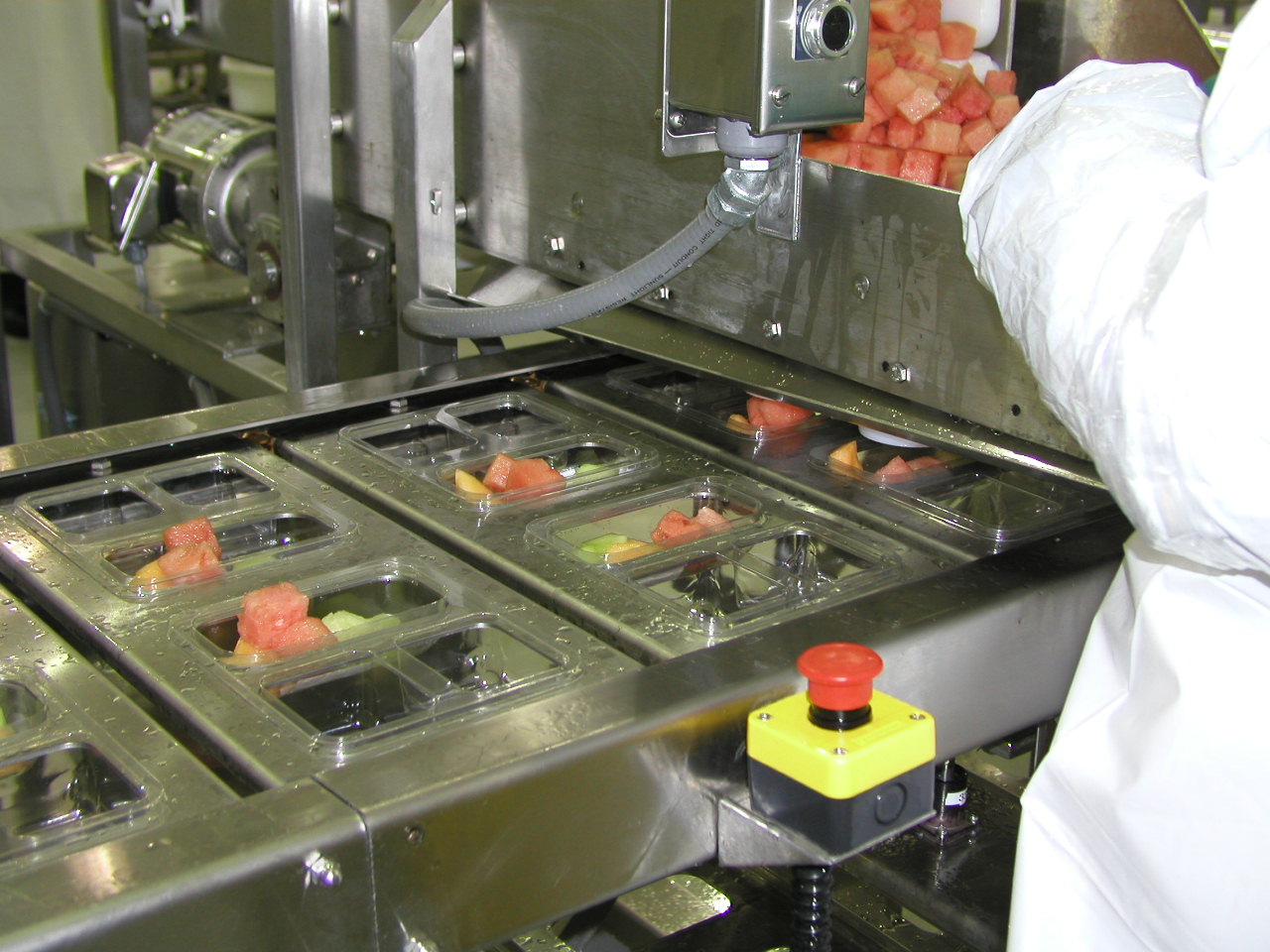
fresh farm packaging machine

Fresh Fruit Packaging Machine

Solutions For Fresh Fruit And Produce Packaging

Packaging fresh fruit and produce presents unique challenges for suppliers. Today’s supply chains are becoming longer and more complicated – and sometimes span several continents. The right choice of logistic services can determine whether or not a fresh produce consignment can be sold. Fresh produce can be shipped by sea, air, road, or in some cases, by rail. It is important to ensure that the delivery process and the packaging of fresh produce on its way from farm to point of sale is adapted to the respective mode of transport.

Packaging not only needs to be leak-proof (for convenience and hygiene purposes) and include machine-readable labels. It should also protect against contamination, so that fresh produce can be transported together with FMCGs in the same consignment. In this context, fresh fruit and vegetable packaging will increasingly be expected to support eco-sustainability, for example, by extending shelf life and using more eco-friendly materials. Growers will either need to expand their in-house packaging capabilities and processes, or enter into partnerships with service providers. We already see the packaging industry ramping up its production capacity for producers – and this trend is likely to continue as online sales increase.

ORICS is a leader in Modified Atmosphere Packaging, (M.A.P.) systems which helps to solve a number of issues for produce and fresh fruit with regard to ensuring freshness and prolonging shelf life.


Orics tray seal machine

diced sliced tomatoes packaging machine

diced sliced tomatoes packaging machine, This turnkey ORICS S-30 system is designed to minimize the number of human operators required for the packaging of diced tomatoes in 4 lb trays. Everything from the dicing of tomatoes to the placement in trays is fully automated, reducing the number of Operators from nearly a dozen to just 2 or 3. Featuring a Denester, Elevator Conveyor, Scale, Scale Interface, Heatseal and Outfeed, this system parallels the processing conveyors that utilize a screw infeed, an elevator conveyor, a dicer and washing/draining/transport system. This system represents a complete packaging system from start to finish and is just one example of how ORICS can increase your bottom line and streamline your applications.

Like all ORICS products, the S-30 is manufactured in the United States at our Farmingdale, NY facility. For more information call 718-461-8613
Orics cups and trays filling and sealing machines.

orics

Cereal weigh fill and seal equipment.

Cereal weigh fill and seal equipment.

The ORICS S-30 2up Tray sealing line for cereal; denests containers, accurately deposits cereal and seals at speeds up to 50-60 containers per minute. The specially designed Eco-Cut Film-Feed mechanism allows for maximum material and cost savings. This Film Mechanism also includes film registration for accurate placement of printed film. This additional feature allows for reduced material usage for point of sale retail purposes. ORICS fully integrates with scales and other third party suppliers to create complete lines. The ORICS S-30 is available in many configurations to meet a variety of production requirements. ORICS Machinery is made in the USA.
Orics cups and trays filling and sealing machines.
240 Smith Street, Farmingdale, NY 11735
718-461-8613


Products Packaged on ORICS Equipment

Lasagna Tray Packaging

Orics full production line for Lasagna or Orics Lasagna tray packaging line, Product assembly to final packaging on the Orics ILTS-1200. Orics fully integrates with scales and other third party suppliers to create complete lines, lasagna tray sealing and packaging.

The series ILTS 1200 line can pack prepared dishes consisting of lasagna and cannelloni with a single production line. Designed and built with the maximum care to the cleaning and hygiene of every part,  with the following approximate hourly production, referring to the lasagna product:  1200, 1800, 2400 trays/hour with the “linear” type line installation. The number and arrangement of the dispensers depends on the recipe to specify the number of layers of pasta and sequence for dosing the liquid ingredients.

The Orics ILTS Modified Atmosphere Packaging (M.A.P.) Equipment is available in many configurations to meet a variety of production requirements. Orics Machinery is made in the USA. Visit our website at www.orics.com.
Orics cups and trays filling and sealing machines. Orics lasagna packaging line machines.
240 Smith Street, Farmingdale, NY 11735
718-461-8613

Orics straight line tray sealer

Orics SLTS-850

Watch Orics ILTS Complete Lasagna Tray packaging Machine.


1000 CMTS-LP

Orics cup and tub filling and sealing machine

Always A Place For Innovation In Yogurt packaging.

Watch Orics MR-35 Rotary Cup Yogurt Filling Sealing Machine.


Watch Orics S-50 Yogurt Filling and Sealing Machine.

Yogurt is a food celebrity. Not only has the cultured dairy delicacy conquered increasing real estate at retail, in refrigerators and lunch bags, it’s now a double-digit growth category for many food service operations, according to The NPD Group, Port Washington, N.Y.

Now is the time to join this booming category. Consumption of yogurt is up an astounding 400% and there’s still a lot of room for manufacturer’s to profit here with the right innovation. Let us give you some ideas in yogurt packaging.

In the wake of the Greek yogurt craze, yogurt remains a superfood with significant upside, according to a recently released report from Packaged Facts, The Yogurt Market and Yogurt Innovation: Greek Yogurt and Beyond. Packaged Facts forecasts that U.S. retail sales of yogurt will approach $9.3 billion by 2017, up from $7.3 billion in 2012. Even with its recent market growth, yogurt continues to be consumed at a much lower per capita rate in the U.S. than in other countries where yogurt is a staple. Moreover, yogurt is spreading beyond the breakfast daypart, reflecting the “breakfast-all-day” culinary and menu trend.

In the U.S. market, retail dollar sales of Greek yogurt increased more than 50% in 2012 to reach $1.6 billion, with significant gains in the mass-market as well as natural and specialty retail channels. At the same time, non-Greek yogurt saw its sales decrease. According to David Sprinkle, publisher of Packaged Facts, “Greek yogurt has raised its share of the refrigerated yogurt market to 35%, up from only 1% in 2007.” Even though it is unlikely that Greek yogurt can keep up its growth marathon, Greek yogurt has continued to increase market sales and share through first quarter 2013.

Private label controls a large share of the market in refrigerated yogurt, in aggregate ranking as the number two brand overall, with growth outpacing the market. In frozen yogurt, private label ranks as the number one brand, although it is a far less important player in yogurt drinks. The restaurant and foodservice industry also is getting in on the action, with Chobani and Dannon opening up their own yogurt shops, and yogurt appearing on more restaurant menus.

The Packaged Facts report also shows how innovative marketers are driving the yogurt and especially Greek yogurt bandwagon into other food categories. Yogurt’s popularity and “healthy halo” have propelled a spill-over over into product categories such as smoothies, frozen yogurt and novelties, cream cheese and butter, salad dressings, dips and spreads, and granola bars, among others.

At Orics we will engineer and fabricate your packaging fill and seal machine for any of your dairy or non dairy applications.

we will built the machine to suit your plant needs as far as speed filling sealing per minute and as far as space and machine size.

we will accommodate you with your every need in packaging filling and sealing machines for cream cheese, smoothie, butter, yogurt, greek yogurt, or salads and fruits fresh from the farm.

check our equipment page or just follow us on our you tube channel for best view video clips of our machines and decide whice one fits your needs.

https://www.youtube.com/user/oricsindustriesinc

https://orics.com/cup-fill-and-seal-machines/.